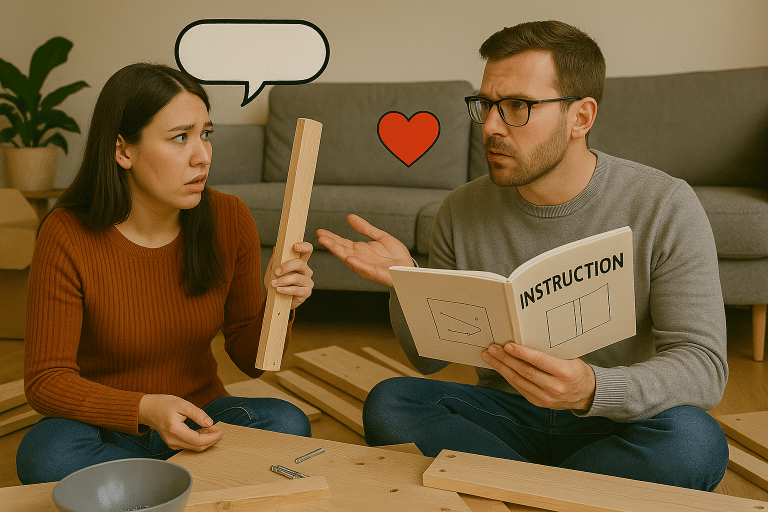
If you’ve ever been in couples therapy before, read relationship books, listened to podcasts, or spent late nights searching “how to communicate better with my partner,” you’ve probably come across the same advice over and over again.
Use “I feel” statements.
Practice active listening.
Avoid blame.
Don’t interrupt.
Validate each other’s feelings.
And while these tools can absolutely be helpful, many couples eventually arrive at a painful and confusing realization:
“We know the tools… so why do we still feel so disconnected?”
This is one of the hardest parts of relationship distress. Most of these couples are not lacking intelligence, insight, or effort. In fact, most couples become incredibly skilled at talking about their relationship. They can explain the cycle. They can identify triggers. They can even repeat the communication strategies perfectly.
And yet, underneath all the talking, both people still feel profoundly alone.
At some point, many couples quietly begin wondering whether the issue is really communication at all.
Because sometimes the problem is not that couples do not know how to talk to each other.
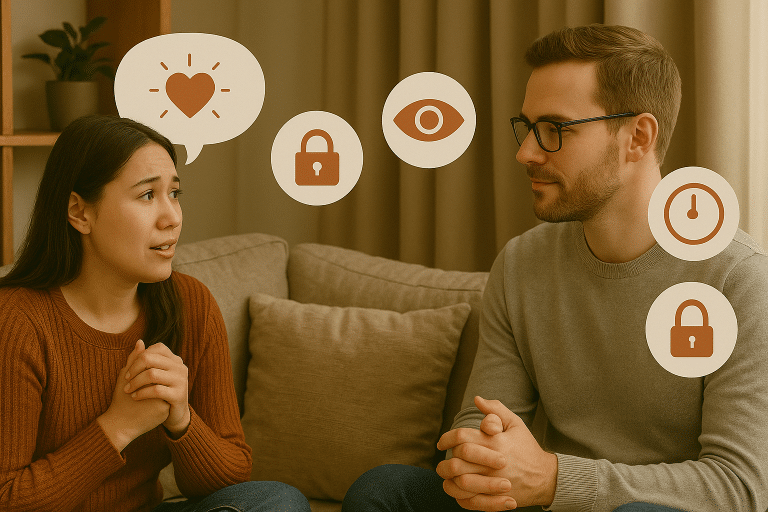
Sometimes the problem is that it no longer feels emotionally safe enough to truly be vulnerable with each other.
When Conversations Stop Feeling Emotionally Safe
Most people do not notice emotional safety disappearing all at once because this usually happens gradually.
A difficult conversation goes badly.
One partner feels criticized.
The other feels dismissed.
Someone shuts down.
Someone becomes reactive.
Neither person fully feels understood afterward.
Then it happens again.
Over time, something subtle begins shifting beneath the surface of the relationship. Conversations that once felt relatively easy begin carrying tension. Small disagreements begin feeling emotionally loaded. One or both partners begin bracing before difficult conversations even start.
Sometimes this looks like withdrawal.
Sometimes it looks like irritability.
Sometimes it looks like emotional numbness.
Sometimes it looks like trying harder and harder to “fix” the relationship while secretly feeling exhausted underneath.
Many couples begin walking on eggshells without even fully realizing it.
Not because love has disappeared, but because vulnerability no longer feels emotionally safe in the same way it once did. And when emotional safety begins eroding, communication itself often changes.
Conversations become more careful, more guarded, or more performative. Partners may begin filtering themselves, holding back emotions, avoiding difficult topics, or speaking through frustration rather than underneath it.
What often gets lost is not simply communication, but the emotional openness underneath it.
Why Communication Skills Sometimes Fail During Conflict
One of the biggest misconceptions about relationships is the idea that couples struggle because they simply “don’t know how to communicate.” But in many distressed relationships, the issue is not a lack of communication knowledge. It is nervous system protection.
When people feel emotionally threatened, misunderstood, rejected, criticized, or disconnected, the nervous system naturally shifts into self-protection.
Some people become defensive.
Some become louder.
Some emotionally shut down.
Some leave the room.
Some go quiet while internally spiraling.
And none of these things happen because they are bad communicators. It happens because the body has stopped experiencing the interaction as emotionally safe.
And once the nervous system moves into protection mode, even good communication tools can suddenly feel inaccessible. A person may know exactly what they are “supposed” to say, but in the moment, their body is overwhelmed with fear, shame, hurt, anger, or panic. Their brain is no longer prioritizing connection. It is prioritizing survival.
This is why couples can sometimes sound calm while feeling deeply disconnected underneath. On the surface they may look like they are communicating, but emotionally, both people still feel alone with their pain.
Most Couples Are Not Actually Fighting About the Surface Issue
One of the most important shifts that happens in Emotionally Focused Couples Therapy is recognizing that most conflicts are not truly about the surface topic.
The fight may appear to be about:
- dishes,
- texting back,
- parenting,
- intimacy,
- tone of voice,
- plans,
- household responsibilities, or
- emotional availability.
But underneath those arguments are often much deeper emotional questions.
“Do I matter to you?”
“Will you respond to me when I need you?”
“Am I emotionally alone in this relationship?”
“Can I trust you with my vulnerability?”
“Are we okay?”
These questions often exist underneath conflict whether couples realize it or not.
This is part of why certain arguments can feel so emotionally intense even when the topic itself seems relatively small. The nervous system is rarely reacting only to the dishes or the forgotten text message. It is reacting to what those moments emotionally represent inside the relationship.
For one partner, a dismissive tone may land as:
“You don’t really care about my feelings.”
For another, emotional withdrawal may land as:
“I’m all alone again.”
And once these deeper emotional fears become activated, communication often becomes much more difficult. Not because couples are failing, but because attachment pain changes how the nervous system responds.
Emotional Safety Is Built in Small Moments
Many people assume that emotional safety builds through dramatic breakthroughs or perfectly handled conversations, but it usually builds much more quietly.
It grows in repeated moments of emotional responsiveness:
- a softened tone during conflict,
- a genuine apology,
- eye contact when someone is hurting,
- reaching back after emotional distance,
- staying emotionally present instead of shutting down, or
- responding with curiosity instead of defensiveness.
These moments may seem small, but over time they become incredibly important.
The nervous system learns safety through repetition.
It learns:
“I can bring difficult emotions here.”
“I do not have to protect myself quite so much.”
“My partner is emotionally reachable.”
“We can repair after disconnection.”
And often, this is where relationships begin slowly shifting again.
Not through perfect communication.
Not through never fighting.
But through rebuilding enough emotional safety that vulnerability becomes possible again.
Slowing Down Changes Everything
One of the most difficult things for many couples is learning to slow down enough to notice what is happening underneath the argument itself.
When conflict becomes emotionally overwhelming, people often rush toward fixing, explaining, defending, or proving their point, but trying to solve the surface issue too quickly can sometimes create even more disconnection.
Because underneath many arguments is not simply a logistical problem.
There is usually hurt.
Fear.
Longing.
Loneliness.
The need to feel emotionally chosen, prioritized, or reassured.
And those softer emotions are often much harder to access when couples are stuck in cycles of criticism, shutdown, defensiveness, or escalation. Sometimes the most healing moments in relationships are not the moments where the problem gets solved immediately.
Sometimes they are the moments where one person says:
“I think underneath all of this, I’ve been feeling really alone.”
And instead of defending or fixing, the other person stays emotionally present long enough to hear it.
Final Thoughts
Most couples assume relationships fall apart because people stop communicating well.
But more often, couples stop communicating honestly because somewhere along the way, it stopped feeling emotionally safe enough to do so.
Communication skills matter. Of course they do.
But communication alone cannot create intimacy if both people are emotionally bracing against each other underneath the conversation.
People open up when they feel emotionally safe.
They soften when they feel emotionally held.
They become more collaborative when the nervous system no longer feels under attack.
And in many relationships, the path back toward connection is not about learning more scripts. It is about slowly rebuilding the emotional safety that allows two people to truly reach for each other again, trusting that their vulnerability will be met with care instead of distance, defensiveness, or disconnection.