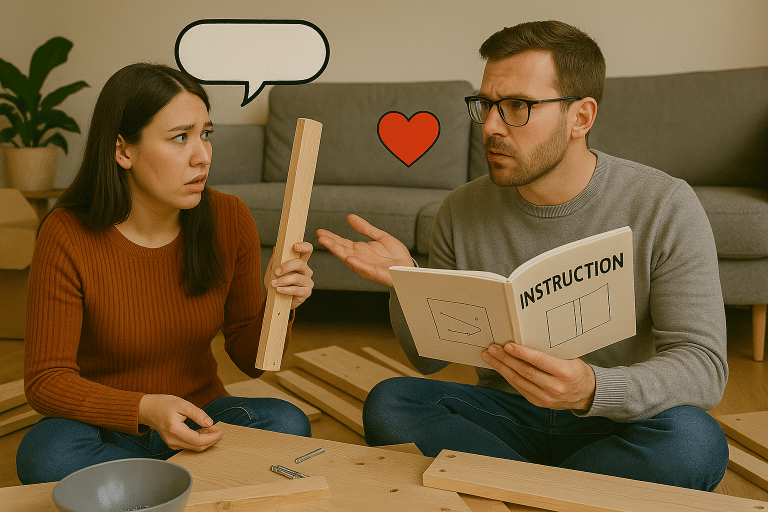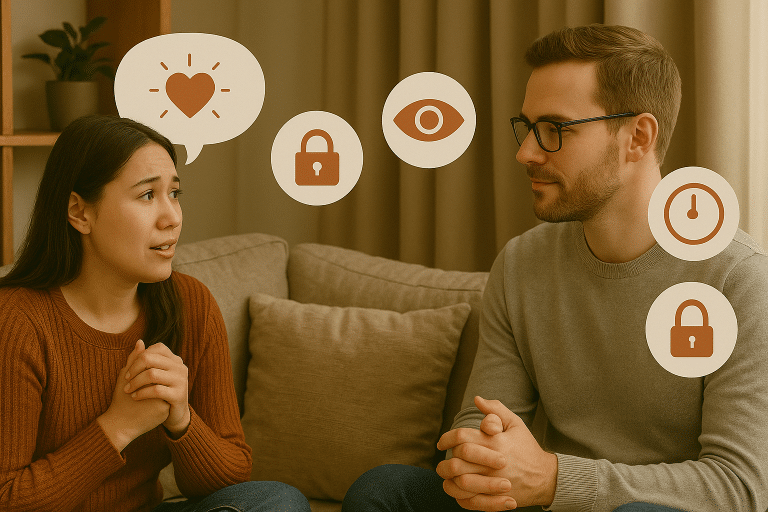
Micro-cheating is the active redirection of emotional, romantic, or sexual energy outside the primary relationship in small, often deniable ways. It can look like a flirtatious, ongoing exchange with someone where each individual message would be defensible but the overall pattern is not something either person is showing their partner. It can look like keeping a particular friendship vague or off the radar. It can look like investing emotional intimacy in someone outside the relationship, sharing the inside of your day with them in ways you have stopped sharing with your partner. It can look like maintaining contact with an ex in a grey area neither of you would defend on the record. It can look like a particular dynamic at work, in a group chat, or on social media, that has a charge to it that the rest of your life does not.
None of these things, on their own, looks like the kind of betrayal most people picture when they hear the word cheating. That is part of why they are so disorienting. You cannot point to a single piece of evidence and say, look, here, this is the thing. You can only feel the cumulative weight of a hundred small moments that signal that something has been moving outside the relationship.
The harder truth, which the term itself sometimes obscures, is that this is still a form of betrayal. It is smaller in scale than a full affair. The line between the two can be blurry. But the redirection of intimacy, paired with the hiding of it, is part of what defines cheating in the first place, regardless of whether anyone has touched anyone. The person doing it usually knows, on some level, that what they are doing would not feel okay to their partner. The screen-switching is part of that knowing. The friendship being framed in a particular way to make it feel acceptable is part of that knowing.
We name this not to alarm anyone, but because too many partners sensing it have been talked out of their own perception. The way back into a useful conversation has to start with calling the thing by its real name.
How trust actually gets built, and how it actually gets lost
To understand what micro-cheating does to a relationship, it helps to understand what trust actually is in the first place.
In the Gottman research, trust is not a yes or no state. It is something built moment by moment, over years, through what the Gottmans call turning toward. Healthy couples, over time, continually direct small bids for connection toward each other. The glance up from the laptop. The “look at this.” The story from the day. Thousands of these moments, week after week, build something the Gottmans call an emotional bank account. The bank account is what the relationship draws from when life gets hard. It is what makes repair possible after fights. It is what gives both people the felt sense that they can count on each other.
Micro-cheating draws down that bank account in two ways at once.
The first is the redirection itself. Every funny thing shared with someone outside the relationship instead of with your partner is a small bid that did not get directed home. Every piece of emotional intimacy given to someone else is a piece of intimacy not given to your partner. None of this is dramatic. It is small. But trust is built in the small, and so trust is also lost in the small.
The second is the hiding. This is often the part that does the deepest damage, and the part the redirecting partner underestimates the most. When you hide something from your partner, however small, you are sending your nervous system, and theirs, a message. You are telling your own body that this part of your life is not safe to be open about. And you are training their body, even when they cannot articulate it, to scan for what else might not be safe.
This is why a partner who senses micro-cheating often reports a strange, low-grade vigilance that does not lift even when reassurance is given. The reassurance does not work because the body is not responding to the explicit content of the words. It is responding to the long pattern of partial openness. The body has learned that some part of the picture is being kept just out of view, and it cannot relax until that changes.
In attachment science, this kind of erosion has a particular signature. Long-term romantic partners function, at a nervous-system level, as primary attachment figures for each other. Your body is tracking your partner’s emotional availability and faithfulness the way bonded mammals naturally track each other. When that tracking starts picking up that something is being held back, the system goes on alert. The alert is not paranoia. It is the body doing what it evolved to do to protect the bond.
This is what makes micro-cheating so corrosive even in the absence of a clear, nameable incident. It is not eroding trust by breaking a single explicit rule. It is eroding the felt sense of safety that the entire relationship rests on.
What this loss of trust actually feels like
For the partner sensing it, the experience tends to follow a pattern.
In the beginning, there is a vague unease that comes and goes. You notice something. You let it go. You notice it again. You wonder if you are being unfair. You scan yourself for jealousy, find some, and decide the problem must be in you.
Over time, the unease starts to shape your behaviour. You begin checking things you would not normally check. You replay moments in your head. You notice yourself becoming hyper-aware of the specific person, or the specific friendship, or the specific dynamic. You may try to bring it up, get dismissed, and feel slightly worse than before, because now the original concern is layered with the fresh wound of not being taken seriously.
Eventually, if nothing changes, something settles in the body that is harder to name and harder to undo. A low-level guardedness. A sense that you are not all the way home in your own relationship. A reluctance to share certain parts of yourself with your partner, because some part of you no longer fully believes that the relationship is the place you can bring everything to.
This is the real cost of micro-cheating. Not the messages. The slow loss of the felt sense that you are safe with this person, that this person is safe with you, and that the relationship is the most important thing in both of your inner lives. That felt sense is what trust actually is, and it is what gets eroded long before any official line is crossed.
What the path back actually looks like
The hopeful part of the same body of research is that this erosion is reversible, when both people are willing to look at it honestly. Attention is a renewable resource. Trust can be rebuilt, although the rebuilding requires more than reassurance and more than promises. It requires a structural change in where intimacy is being directed.
If you are the partner who has been redirecting energy outside the relationship, even in small ways, the path back is not primarily about defending what you have been doing. It is about being willing to see, with as little defence as you can manage, what has actually been moving outside the relationship, and bringing it back. This might mean closing a specific channel of messaging. It might mean telling your partner about a friendship you have been keeping vague. It might mean letting your partner have access to parts of your inner life that you have been routing elsewhere.
If you are the partner who has been sensing something, the path back is not about becoming the relationship’s surveillance system. It is about naming what you have been feeling, taking it seriously, and asking for the kind of openness that allows your nervous system to actually settle. You are allowed to ask for that. You are not asking for too much.
For both of you, the slow rebuilding of trust will not come from a single dramatic conversation. It will come from many small moments of attention being redirected home, of hidden things being made open, of bids being turned toward, day after day. The same way trust was built in the first place. And the same way it is lost.
A gentle word about getting support
Conversations about trust, especially ones where the line between concern and accusation feels impossible to walk, are some of the hardest conversations couples ever try to have on their own. They tend to spiral, get defensive, and end up further from connection than where they started, even when both people genuinely want the same thing.
This is one of the situations where the steady presence of a couples therapist can be most useful. Not to assign blame. Not to decide whether something counts as cheating. But to slow the conversation down enough that both of you can hear what the other one is saying underneath the surface, and to help you rebuild the kind of openness that trust actually needs to grow back.
If something in this piece landed for you, that is worth taking seriously. The discomfort you have been carrying is real. The shift in trust you have been sensing is real. And the path back toward each other, while not easy, is almost always possible when both people are willing to look at what has been happening with honesty and care instead of defence.
You are not imagining it. And the longer the erosion goes on without being addressed, the harder it becomes to rebuild what is being lost.