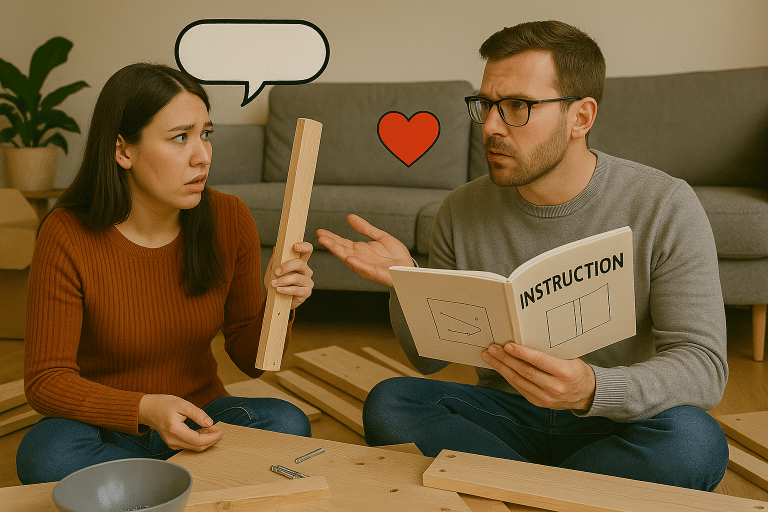
If you’ve ever found yourself thinking, “How are we here again?” after an argument with your partner, you’re not alone. Many couples feel stuck in repetitive conflicts where the topic may shift, like chores, communication, plans, or intimacy, but the emotional experience feels eerily familiar. It can start to feel frustrating, discouraging, and even hopeless.
The truth is, most recurring arguments aren’t actually about the surface issue. There’s something deeper happening underneath.
It’s Not the Topic. It’s the Cycle.
What keeps couples stuck isn’t usually what they’re arguing about. It is how they are relating to each other in those moments.
Over time, couples develop predictable interaction patterns. One partner gets triggered and reacts, which then triggers the other partner, and before long, both people feel misunderstood, unheard, or even alone. These moments can escalate quickly, and what began as a small disagreement turns into something much bigger.
Eventually, these patterns become automatic. Instead of responding to what is happening in the present moment, each partner is reacting to the emotional residue of past conflicts. Old feelings, unmet needs, and previous hurts quietly shape the current interaction. It is no longer just about today. It is about every other time this has happened before.
The Pursuer–Withdrawer Pattern
One of the most common dynamics we see in couples is the pursuer–withdrawer cycle.
In this pattern, one partner, the pursuer, seeks closeness, reassurance, or resolution. They might ask questions, push for conversation, or express frustration in an attempt to feel connected or understood.
The other partner, the withdrawer, may begin to feel overwhelmed, criticized, or inadequate. To cope, they pull back, emotionally, physically, or both. They may shut down, avoid the conversation, or disengage altogether.
Here is where the cycle intensifies:
- The more the pursuer reaches out or pushes, the more the withdrawer pulls away
- The more the withdrawer distances, the more urgent and distressed the pursuer becomes
Both partners are trying to protect themselves, but in very different ways.
The pursuer is often protecting against feelings of abandonment or disconnection.
The withdrawer is often protecting against feelings of failure, overwhelm, or not being enough.
Neither person is the problem. The cycle itself is.
Why These Patterns Feel So Hard to Break
These interaction patterns are deeply rooted. They are shaped by past experiences, attachment styles, and the ways we have learned to cope with emotional discomfort.
Because they happen so quickly and automatically, couples often do not realize they are in the cycle until it has already escalated. And when both partners feel hurt or defensive, it becomes even harder to slow things down and respond differently.
Without awareness, the cycle keeps reinforcing itself:
- Each argument confirms the pursuer’s fear of disconnection
- Each argument reinforces the withdrawer’s sense of overwhelm or inadequacy
Over time, this can erode trust and emotional safety in the relationship.
Cycles Can Change
The good news is that these patterns are not permanent.
Change begins with awareness. When couples start to recognize the pattern itself, rather than blaming each other, they create space for something new.
Here is what helps shift the cycle:
- Slowing the interaction down so reactions do not take over
- Naming the pattern, for example, “We are doing that thing again”
- Understanding the vulnerable feelings underneath, like hurt, fear, or longing
- Responding with intention instead of instinct
When partners begin to see the softer emotions beneath the reactions, empathy starts to grow. Instead of seeing each other as adversaries, they begin to recognize that both are trying to feel safe, connected, and valued.
With time, practice, and often the support of a therapist, couples can move from reactive cycles into more secure, responsive ways of relating.
Moving Toward a More Secure Connection
Breaking the cycle does not mean you will never argue again. Conflict is a natural part of any relationship.
But it does mean that your arguments can start to feel different:
- Less about winning or defending
- More about understanding and connection
- Less reactive, more intentional
- Less painful, more productive
When couples learn to recognize and shift their patterns, they build something deeper, a sense of emotional safety and trust that allows both partners to feel seen, heard, and supported.
And that is where real change happens.
If you are noticing these patterns in your relationship, you do not have to navigate them alone. With the right support, it is absolutely possible to break out of the cycle and create a more secure, connected bond.
To connect with one of our therapists, reach out for a free consultation. We are here to help.