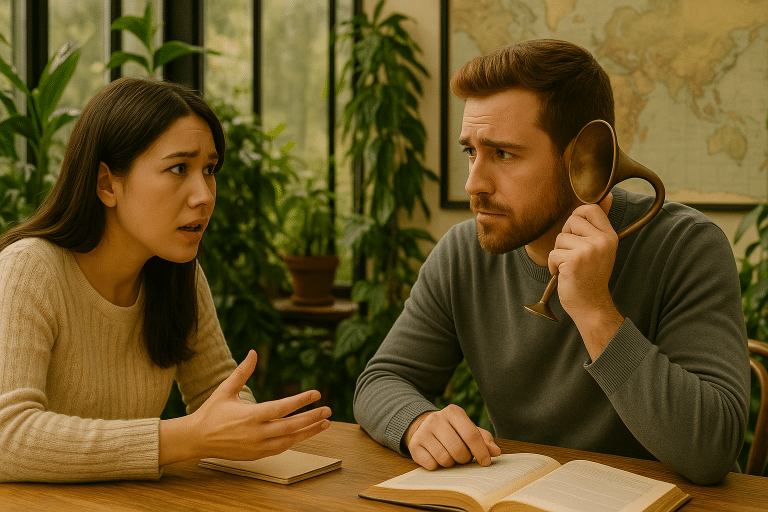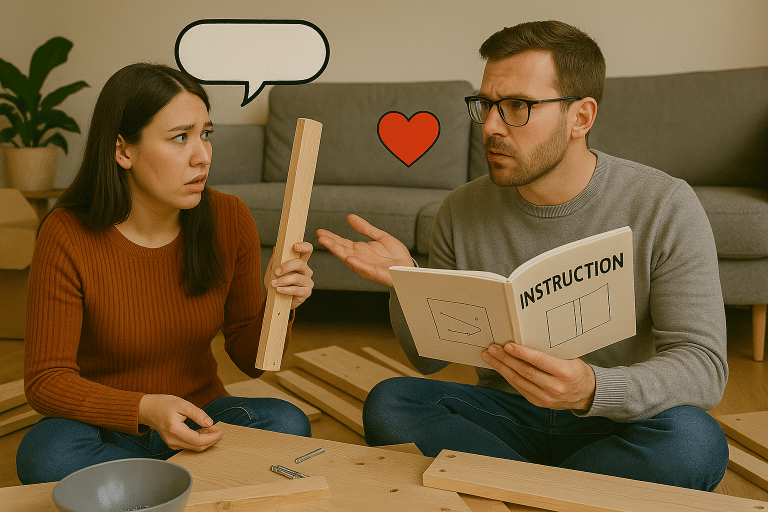
Most couples, when they think about why their fights go wrong, replay the middle and the end. The raised voices. The words that cut. The cold silence that followed. The long walk back to each other, if it came at all.
But the research on couples points to something quieter and more uncomfortable. How a conflict is going to unfold, and in many cases how the whole relationship is going to unfold, is often decided in the first three minutes. Sometimes the first three seconds.
If you’ve ever found yourself thinking, I didn’t even know what I said that was so wrong, or I brought it up as gently as I could and it still blew up, or we were fine and then suddenly we weren’t, you’re not imagining it. There’s something real happening in those opening moments of a hard conversation. And once you can see it, a lot of what feels impossible in your relationship starts to feel workable.
Why the Beginning Carries So Much Weight
The research that points to this comes from Dr. John Gottman’s decades of studying couples in his lab. In one of his most-cited findings, he and his team were able to predict, with striking accuracy, how a fifteen-minute conflict discussion would end, just from watching the first three minutes. Later research extended that even further: how couples handled the opening of their conflicts predicted how the relationship itself was doing years later.
That can sound discouraging at first. Great. So we’re doomed by minute three. But here’s the hopeful part: if the opening of a conflict matters that much, it also means the opening is where the most meaningful change can happen. You don’t have to become perfect communicators. You don’t have to master every technique in every book. If you can shift how you begin, everything downstream of that begins to shift too.
What makes those opening moments so decisive is the human nervous system. When one partner opens with blame, criticism, sarcasm, or contempt, the other partner’s body registers it as a threat, often before their mind has even caught up. Heart rate rises. The body braces. The parts of the brain that handle listening, empathy, and problem-solving go quiet. From there, the conversation is no longer two people trying to understand each other. It’s two alarmed nervous systems trying to protect themselves.
This is why a fight that started with “you never think about me” so rarely ends in genuine repair. Not because the person who said it is a bad person, but because once both bodies are in threat mode, you’re not really talking anymore. You’re defending.
What’s Actually Underneath a Harsh Start
When a conversation opens in an attacking way, it’s almost never because someone is cruel. It’s usually because someone has been hurting for a long time, often in silence, and the hurt has finally pressurized into something sharper than they meant it to be.
This is one of the tenderest things the research on couples reveals. The partner who “starts fights” is often the partner who has been quietly swallowing small disappointments for weeks, or months, or years, trying to be easy, trying not to make waves. By the time something comes out, it doesn’t sound like the small feeling underneath. It sounds like an accusation. And the partner on the receiving end, understandably, hears an attack and responds to the attack, never making it down to the tender thing that was actually being reached for.
Dr. Sue Johnson, who developed Emotionally Focused Therapy, describes this as the surface and the depth of a fight. On the surface, a couple is fighting about the dishes, or money, or who texted whom back first. Underneath, almost always, they are asking each other a much more vulnerable question. Do you still care about me? Am I still important to you? Are you there if I reach for you? When that deeper question gets dressed up in criticism, the partner answering it can only hear the criticism. The real question never gets to land.
If you and your partner keep having the same fight, it’s worth gently asking yourselves: what is the question underneath the question? What are we actually trying to ask each other when we fight about this?
A Softer Way to Begin
Gottman’s research on what successful couples do differently in those opening moments is surprisingly specific. The couples whose relationships stayed strong over time brought things up without pointing a finger. They talked about themselves rather than diagnosing their partner. And they named what they wanted in a concrete, doable way, not just what they resented.
In practice, it looks something like this. Instead of you never help around here, it becomes something closer to I’m feeling overwhelmed, and it would really help me if we could figure out a way to split Sunday nights together. Instead of you don’t care about how I feel, it becomes I’m feeling kind of lonely lately, and I miss us.
Notice what’s happening in those sentences. The person is starting with their own feeling. They’re describing a situation instead of assigning a character flaw. And they’re making a request their partner can actually meet.
This matters for a reason that often gets missed. When you ask your partner for something specific, you’re not just being clearer. You’re also saying, underneath the words, I trust you to care. I believe you want to show up for me. I see you as someone who can meet this. And most partners, when they feel trusted like that, respond very differently than when they feel accused.
A harsh startup says, at the deepest level, you are the problem. A gentle startup says, I have a problem, and I’m bringing it to you because you’re my person. Two completely different invitations.
The Other Side of the Conversation
All of this assumes, of course, that there are two people doing the work. And this is where it gets harder, and more honest.
Even the gentlest opening can fall flat if the partner hearing it can’t find their way to curiosity instead of defensiveness. If you’re the one being approached, the work is different but just as real. It’s about resisting the very human urge to defend yourself, explain yourself, or correct the record, long enough to actually hear what your partner is reaching for.
John Gottman has a line that has stayed with a lot of therapists over the years. He says that when his wife is in pain, the world stops and he listens. That’s not a magical ability. It’s a decision, made over and over, to let your partner’s hurt matter more than your need to be right in this moment.
This doesn’t mean agreeing with every interpretation your partner offers. You can hear someone deeply and still see things differently. But when they’re in pain, your job isn’t to correct them. It’s to be there. Understanding can come before agreement. Often it has to.
Something Small to Try This Week
If there’s a tender topic that keeps circling back in your relationship, one that you know you’ll need to talk about again, try this before the next time it comes up.
Take a quiet moment by yourself and finish this sentence: When this happens, what I actually feel underneath the frustration is… Not what you want to say to your partner. What you feel, before any words have been aimed at anyone.
You might find something softer under the anger. Lonely. Scared. Unimportant. Tired. Invisible. These are the words your partner is more likely to be able to hear.
Then, when the moment comes, try opening with that softer truth instead of the sharp one. Not because the sharp one isn’t real, but because the softer one is usually the door into the room where real change happens.
And if you’re the one being reached for, try this: before you explain, correct, or defend, try saying, tell me more about that. Four words. It’s astonishing how much a conversation can shift when one person genuinely wants to hear more instead of less.
When It’s Hard to Do This Alone
Changing the way you begin hard conversations is one of the most powerful shifts a couple can make. It’s also one of the hardest, because the opening moments of a fight are often when you’re at your most tired, most triggered, and least able to think clearly. You’re trying to do a different thing in the exact moment your nervous system most wants to do the old thing.
This is part of why couples therapy exists, and why approaches like EFT and the Gottman Method have so much evidence behind them. A good therapist doesn’t teach you scripts. They help both of you slow down enough to notice the pattern you keep falling into, and they hold the room steady while you both practice reaching for each other in a new way.
Many couples find that this kind of shift happens more easily with the guidance of a therapist who can help them hear each other underneath the noise of old fights, and who can help both partners feel safe enough to stop defending and start showing up differently.
Wherever you are in that process, it’s worth remembering this. The couples who go the distance aren’t the ones who never fight. They’re the ones who, over time, learn to begin their hard conversations from a place of reaching, not accusing. And that skill, unlike chemistry or luck, is something you can actually learn together.