There’s a quiet, almost embarrassing question that a lot of people carry into their marriages and never quite say out loud. Some version of, am I actually doing this right?
You can describe what a good marriage looks like. You can name the qualities you’d want, things like trust, warmth, feeling known, being able to talk through hard moments, feeling like a team through whatever life throws at you. You may have read articles, watched videos, listened to podcasts, even picked up a book or two. You know, in theory, what a healthy marriage is supposed to feel like.
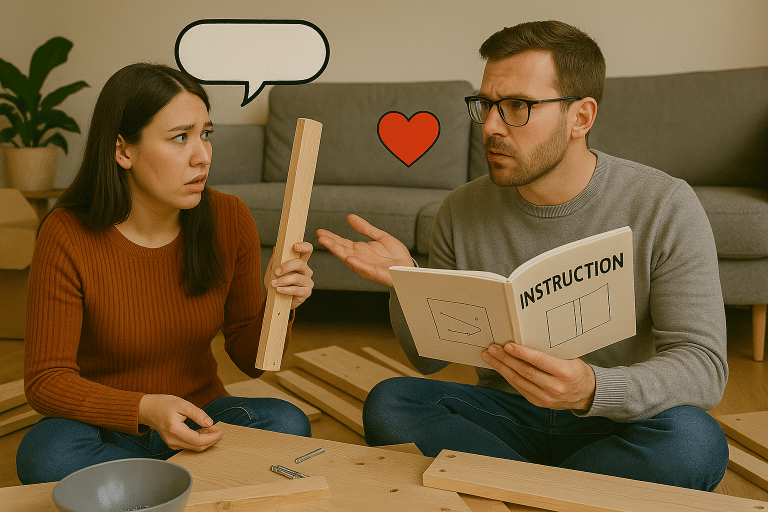
And yet, in the actual day-to-day of being married, it can still feel like you’re improvising. You don’t always know how to bring something up to your spouse. You don’t always know what to do when they’re upset and you don’t know how to help. You don’t always know whether what you’re feeling is reasonable, or whether asking for what you need is too much. There’s a quiet, persistent sense that other married couples seem to have figured something out that you missed somewhere along the way.
If this is you, here’s the thing. You didn’t miss the lesson. The lesson was almost never given.
The Class No One Took
We grow up learning how to do all kinds of things. Math. Reading. Driving. Maybe how to manage money, if we were lucky. Some of us were taught how to job hunt, how to write a resume, how to give a presentation.
What almost none of us were ever explicitly taught is how to be married. Not the abstract idea of marriage, but the actual moment-to-moment skills of it. How to bring up a hurt without making your spouse defensive. How to listen when you yourself are activated. How to repair after a fight. How to ask for something you need without apologizing for needing it. How to navigate the years when the kids are small and the two of you barely see each other. How to keep finding each other through career changes, illnesses, the loss of parents, and the slow accumulation of life.
This is one of the strange gaps in how we prepare people for adult life. We treat the skills of marriage as if they should be self-evident, intuitive, automatic. As if anyone who’s reasonably mature should just know. And then, when married couples struggle, we tend to pathologize it. Something must be wrong with one of you. Or with the marriage itself. Or with the choice you made years ago at the altar.
But what’s actually true, in most cases, is much simpler and much kinder. The skills of marriage are real. They can be learned. And almost no one teaches them, so almost everyone arrives in marriage a little under-prepared. Including you. Including your spouse. Including the couples whose marriages look effortless from the outside.
What Marriage Researchers Have Actually Found
The good news, and the part that often gives married couples real hope when they hear it, is that the skills that make marriages work have been studied carefully for a long time. We know quite a lot about what tends to help and what tends to hurt.
Decades of research, much of it from the labs of Dr. John Gottman and Dr. Sue Johnson, points to a few things that come up over and over again in marriages that stay genuinely close across years and decades.
The first is self-awareness. The ability to know what you’re feeling, to know what you actually need, and to be honest about it with yourself before you bring it to your spouse. Most marital fights aren’t really about what they look like on the surface. They aren’t really about the dishes, the in-laws, the calendar, the money. They’re about a feeling underneath, often a tender one, that hasn’t been named yet. Marriages that do well over time are usually marriages where both partners can, at least some of the time, locate that tender feeling in themselves and offer it instead of the sharp version.
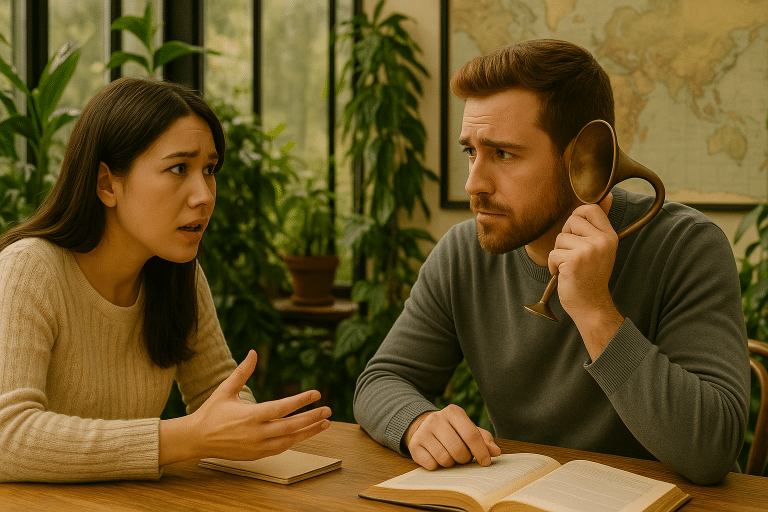
The second is care for each other’s inner world. Not agreement. Not always seeing it the same way. The simple, ongoing willingness to act as if your spouse’s experience is real, important, and worth understanding, even when you don’t share it. This is what Dr. Johnson’s research keeps returning to as the heart of attachment in adult love. The question married partners are always quietly asking each other is, do you still see me? Do I still matter to you? And the way it gets answered is in small moments, all day long, across the years.
The third is managing your own reactions well enough to stay in the conversation. Hard moments in a marriage send a real, physical signal through the body. Your heart rate goes up. Your thinking narrows. The part of you that wants to defend, accuse, withdraw, or shut down gets very loud. The married couples who do well aren’t the ones who don’t feel any of this. They’re the ones who can notice it happening and slow themselves down enough to choose how they respond.
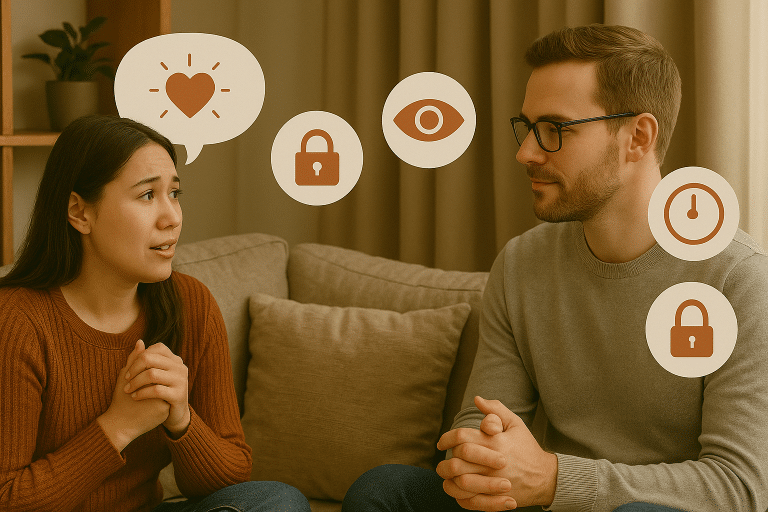
These three threads, woven together over years of marriage, are what make the difference. Not grand anniversary gestures. Not perfect chemistry. The unglamorous, repeatable practice of knowing yourself, caring about your spouse’s inner world, and managing your own reactions when things get hard.
Why “Just Communicate Better” Misses the Point
A lot of marriage advice gets reduced to just communicate. Use I-statements. Talk things out. Don’t go to bed angry.
The reason this kind of advice often falls flat is that it skips over the harder, deeper work underneath communication. You can use perfect I-statements and still be communicating from a place of years of resentment. You can talk things out and still leave the underlying hurt completely untouched. Words alone don’t fix marriages. The way the words land depends on what’s underneath them.
What actually shifts a marriage is something more like this: when something hurts, you take a moment to ask yourself what it really is. Not the version that wants to come out as a complaint. The actual feeling, underneath the complaint. And then you bring that softer, more honest version to your spouse. Your spouse, in turn, has done some work to be able to hear it without immediately defending. They’ve practiced being able to say tell me more, even when their first impulse is that’s not fair. They’ve learned that their job in those moments isn’t to prove themselves right. It’s to be there with you.
This is a different thing than communication tips. This is two married people, over time, becoming the kind of people who can actually meet each other.
The Reframe That Helps Most
If you’ve been carrying a sense of shame about how hard your marriage sometimes feels, here’s the reframe worth sitting with.
You are not failing at something everyone else figured out. You are working on something almost no one is taught. The struggle is not a sign that something is uniquely wrong with you, or with your spouse, or with the marriage you built together. The struggle is what it looks like to be two people who were raised in a culture that treated relational skills as optional, trying to build something deeply skilled together over decades.
That doesn’t make it easy. It does make it normal. And it puts the question in a more useful place. The question isn’t did we make a mistake? The question is what do we want to learn together?
Marriages that grow the most are usually marriages where both partners stop treating their difficulties as proof that something is broken and start treating them as material to grow from. The same hard conversation, had on a third try with a little more skill than the first two, can change a marriage. The same fight, slowed down for a moment so both spouses can see what’s actually happening, can become a doorway instead of a wall.
Something Small to Try
If you want to begin practicing one of these skills this week, try this. Take a moment, by yourself, and finish the sentence, what I’m actually feeling under all this is…
Don’t reach for what you want to say to your spouse. Don’t reach for the version that argues your case. Reach for the version that’s true. Lonely. Tired. Scared. Disappointed. Worn down. Hopeful but exhausted. Missing the way things used to feel. Something else entirely.
Most people are surprised by what they find when they slow down enough to look. The thing underneath is almost always softer than the thing on top. And the thing underneath is what your marriage is actually trying to talk about.
You don’t have to share it right away. You can just notice it. The act of noticing is itself a skill. Over time, the more you can locate what’s actually true in you, the more honest, useful, and connecting your conversations with your spouse will become.
When It’s Hard to Do This Alone
The skills that make a marriage work can be learned. They are also genuinely hard to learn alone, especially in the middle of a marriage that’s already strained, or several years in when patterns have settled. Most of us learn the early version of how to handle conflict, closeness, and need from the families we grew up in, and those early lessons run automatically, in the background, even when we know better. They tend to surface most strongly in marriage, because marriage is where we’re most committed, most exposed, and most likely to be reminded of the families we came from.
This is part of why couples therapy exists. A skilled therapist, especially one trained in attachment-informed approaches like EFT or in the Gottman Method, doesn’t just give you tips. They help you both notice what’s happening in real time, slow it down enough to see clearly, and practice doing something different in the moments when your old wiring would normally take over.
Many married couples find that the shift from we keep having the same hard conversation to we know how to find each other again happens more easily with the guidance of a therapist who can hold the space while both spouses learn the skills they were never quite taught.
If you’ve ever had the quiet thought, I don’t actually know how to do this, please hear this. You’re not alone in that. Most married people don’t, at least not at first. And the willingness to learn, slowly and together, is itself one of the most loving things two spouses can do.
The good news, in the end, is simple. A healthy marriage isn’t a personality. It’s a practice. And practices, by their nature, can begin again any day.des.
The first is self-awareness. The ability to know what you’re feeling, to know what you actually need, and to be honest about it with yourself before you bring it to your partner. Most fights aren’t really about what they look like on the surface. They’re about a feeling underneath, often a tender one, that hasn’t been named yet. Couples who do well over time are usually couples where both partners can, at least some of the time, locate that tender feeling in themselves and offer it instead of the sharp version.
The second is care for each other’s experience. Not agreement. Not always seeing it the same way. The simple, ongoing willingness to act as if your partner’s inner world is real, important, and worth understanding, even when you don’t share it. This is what Dr. Johnson’s research keeps returning to as the heart of attachment in adult love. The question we are always quietly asking each other is, do you see me? Do I matter to you? And the way it gets answered is in small moments, all day long.
The third is managing your own reactions well enough to stay in the conversation. Hard moments in a relationship send a real, physical signal through the body. Your heart rate goes up. Your thinking narrows. The part of you that wants to defend, accuse, withdraw, or shut down gets very loud. Couples who do well aren’t the ones who don’t feel any of this. They’re the ones who can notice it happening and slow themselves down enough to choose how they respond.
These three threads, woven together over years, are what make the difference. Not grand gestures. Not perfect chemistry. The unglamorous, repeatable practice of knowing yourself, caring about your partner’s inner world, and managing your own reactions when things get hard.
Why “Just Communicate Better” Misses the Point
A lot of relationship advice gets reduced to just communicate. Use I-statements. Talk things out. Don’t go to bed angry.
The reason this kind of advice often falls flat is that it skips over the harder, deeper work underneath communication. You can use perfect I-statements and still be communicating from a place of resentment. You can talk things out and still leave the underlying hurt completely untouched. Words alone don’t fix relationships. The way the words land depends on what’s underneath them.
What actually shifts a relationship is something more like this: when something hurts, you take a moment to ask yourself what it really is. Not the version that wants to come out as a complaint. The actual feeling, underneath the complaint. And then you bring that softer, more honest version to your partner. Your partner, in turn, has done some work to be able to hear it without immediately defending. They’ve practiced being able to say tell me more, even when their first impulse is that’s not fair. They’ve learned that their job in those moments isn’t to prove themselves right. It’s to be there with you.